Challenges confronting female parliamentarians – way forward
Challenges confronting female parliamentarians – way forward
“Extra effort and persuasive tactics are necessary to win an election and to maintain a seat.”
That is what women who participate in national elections say they must go through. Some female parliamentarians have been speaking in the lead-up to the December 7 general elections.
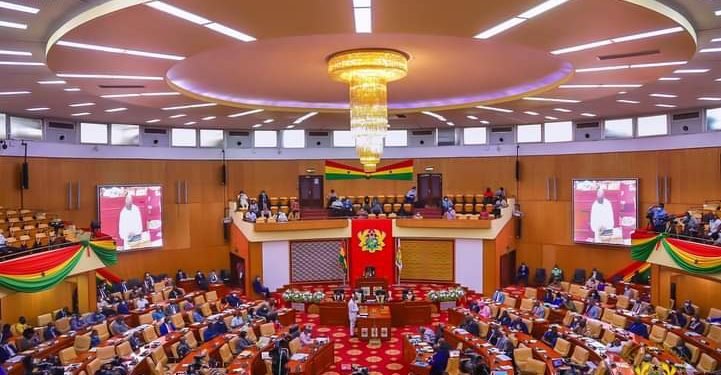
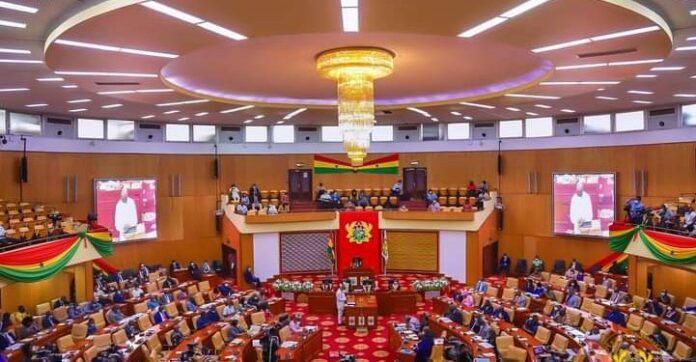
The political landscape in Ghana is predominantly dominated by men. The situation is similar in Parliament.
Since the 4th Republic’s inception, the number of women in Parliament has been consistently low. In the first Parliament, only 16 out of 200 MPs were females.
The number increased to 18 in the 2nd and 3rd Parliaments, 25 in the 4th Parliament, and then to 20 in the 5th Parliament. In the 6th Parliament even though the number increased to 31, it was still insignificant.
The 8th Parliament has so far witnessed the highest number of female MPs with 40 of them as against 235 males.
Some female MPs argue that despite their numerous efforts to remain active in politics, they are often discouraged by various factors.
“In 2011 when I first showed up for my political office, a number of the men branded me as “davituqui.” “Davituqui’” in Ewe means small girl, meanwhile my opponent at the time was a year younger than myself. They had given all sort of names just so they will be able to discourage me from vying for a higher office’’. Narrates MP for Afram Plains North, Betty Krosby Mensah.

Betty Afua Krosby Mensah, MP for Afram Plains North asserts that women require significant effort to persuade voters, than men do.
“A man goes to the constituency involves the young men and probably takes them to a bar and give them a drink and he is seen as the best of MPs and a woman you can’t take the young men to the bar to drink and so people are expecting that you are paying school fees, people are expecting that you are paying hospital bills, the longest serving MPs in parliament are not women, they are men and the question is what have they done extraordinarily to deserve being in the house for so long,” she asked.
Patricia Appiagyei, MP for Asokwa and Deputy Majority Leader laments how the various political parties allow women to be fiercely contested.

‘’ If I tell you how I felt on Saturday learning about Cynthia Morrison adding on to the numbers I was totally disrupt, because it is about time that we should develop or encourage our women to take up political positions, but I think we are rather discouraging them by the political parties allowing women to be contesting fiercely.’’
MP for Ada and 2nd Deputy Minority Whip, Comfort Doyoe Ghansah says when the men who contest the women realise that they have failed, they often begin to attack the personality of the women just to discourage them.

“At times they see that your organizer is helping you, then they label the two of you, oh that is the girlfriend, oh that is the boyfriend, see she is flirting with the organizer that is why the organizer is seriously helping her. Even people will go to the extent to talk to your husband, and your wife this, your wife that and you see women they start coiling in, those things should not put you off at all,” she said.
MP for Abuakwa North, Gifty Twum Ampofo also expressed worry the manner in which women who put themselves up for political positions are attacked verbally.

“Because of the heckling, some families would not say that yes go and most of the time women in politics either you are accused that you have no child, you do not have money, you are a prostitute, too many things. And when a woman is of status where she thinks she is married, she is in a good job, she has enough for herself and her children why do I worry myself to take care of the whole of the constituency and even they won’t show appreciation,” she explained.
It is sad to note that out of the 40 female MPs in Parliament 10 have lost their bid to contest again in the December 7 elections with one deciding not to contest again, making the number of female MPs who will not be returning to parliament 11.
So, as it stands, 29 sitting female MPs will contest in the December polls and one cannot guarantee all of them winning. If all do the better, but still the number will remain unfavourable.
The female MPs contend that women often face higher expectations from their constituents than men, urging for education and sensitization to address these gender disparities.
“The system must be equipped like NCCE, they have to do the education for ordinary Ghanaian to know that being an MP is not a man’s job, society gives women too much or too many responsibilities,” they noted.
About The Author


