Debate over Dutch passport and a Ghanaian PhD must serve as a reminder of the challenges facing Ghana – Paul Boateng
Debate over Dutch passport and a Ghanaian PhD must serve as a reminder of the challenges facing Ghana – Paul Boateng

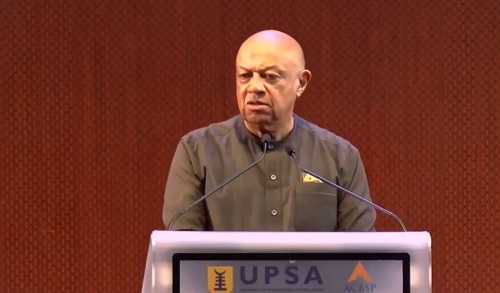
A member of the House of Lords, United Kingdom, Rt. Hon. Paul Boateng has added his voice to the ongoing social media debate surrounding the benefit of a Dutch passport and a Ghanaian PhD.
He says that this debate must serve as a reminder of the challenges facing Ghana.
To him, it is a worry that some Ghanaians had the view that the passport was worth more than the PhD.
“We are held down in an impoverished and conflicted posture by our dependence on external aid and the great powers, and it is something terrible when a statement on the internet that a Dutch Passport is worth more than a Ghanaian PhD.
“It is something terrible when that goes viral on the internet. We cannot allow it to be so and leadership must be at the heart of our response,” he said while delivering an address at the 2024 Annual Leadership Lecture at the Kofi Ohene-Konadu Auditorium at the University of Professional Studies, Accra (UPSA) on Tuesday, June 18.
The event was on the theme “Fulfilling the Promise: The Challenge of Leadership! Moving from Rhetoric to Delivery.”
Rt. Hon. Paul Boateng further admonished Ghana to reduce its dependence on aid.
He noted that Ghana has been impoverished for years due to its dependence on external aid.
Break the vicious cycle of dependence on external aid – Paul Boateng tells Ghana
Referring to President Akufo-Addo’s 2018 statement with French President Emmanuel Macron highlighting the need for Africa to wean itself off external aid, Paul Boateng, said “Break the vicious cycle of dependence on external aid. Who here does not remember the moment His Excellency the President Nana Addo Dankwa Akufo-Addo stood next to the president of France Emmanuel Macron and went viral and made the point about the need for us to cease to have to rely on external aid if we are to break that vicious cycle of dependence on external aid and those great powers who have fed and continue to feed on Africa’s resources and whose activities with their willing collaborators hold Africa down in an impoverished and conflicted posture?”
About The Author


